
Today was an interesting day of seeing (and not seeing) some ancient landmarks in the region. We are staying at the Quince Cottage in Letcombe Regis which is a very nice town. We were very concerned when we arrived because to get here, we had to leave the trail and walk down a very very steep hill and then more hills, for about 1.6 miles. We figured that the hike back to the trail in the morning was going to be a hike in itself. I asked the B&B owner if they would gives us a lift back and he said that a ride back is part of the service. Tea and cake when you arrive is also part of the service.


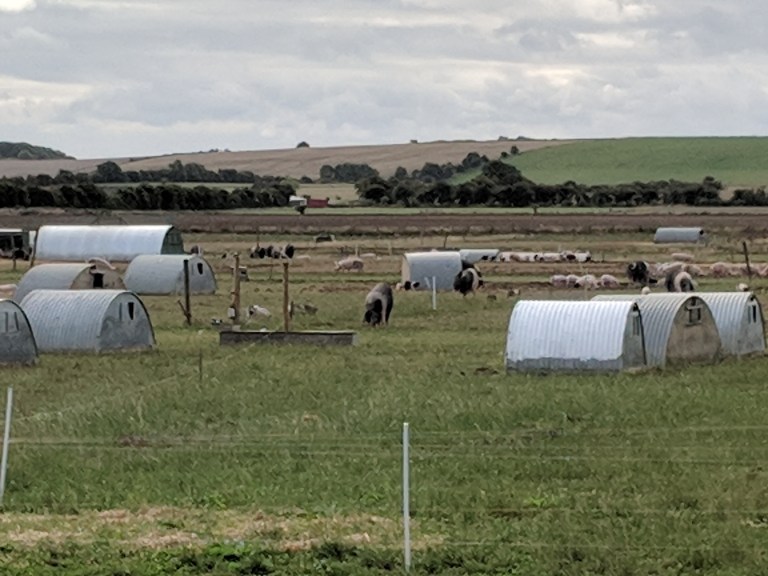
The first thing we saw this morning when we climbed back to the trail from Bishopstone (another steep climb that we didn’t notice on the way down) was a pig farm. Cora and Grant were fascinated by the one we passed on the bus to Stonehenge, so here’s a picture for them.
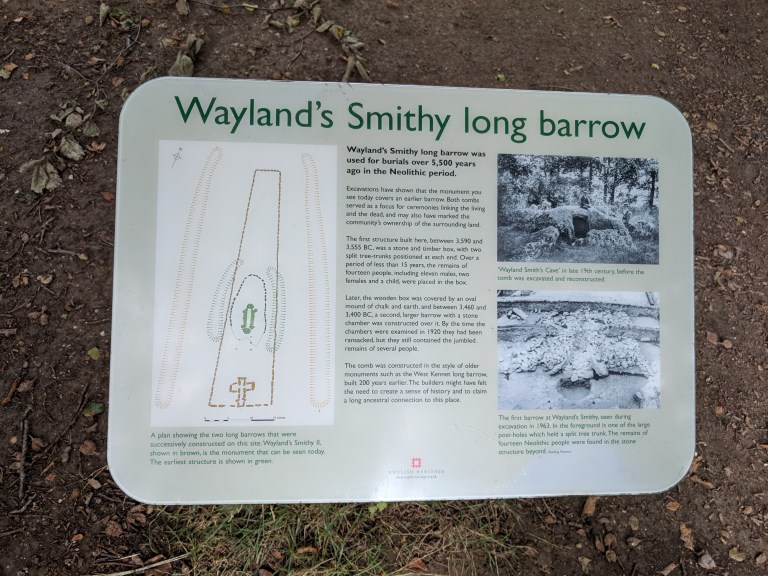
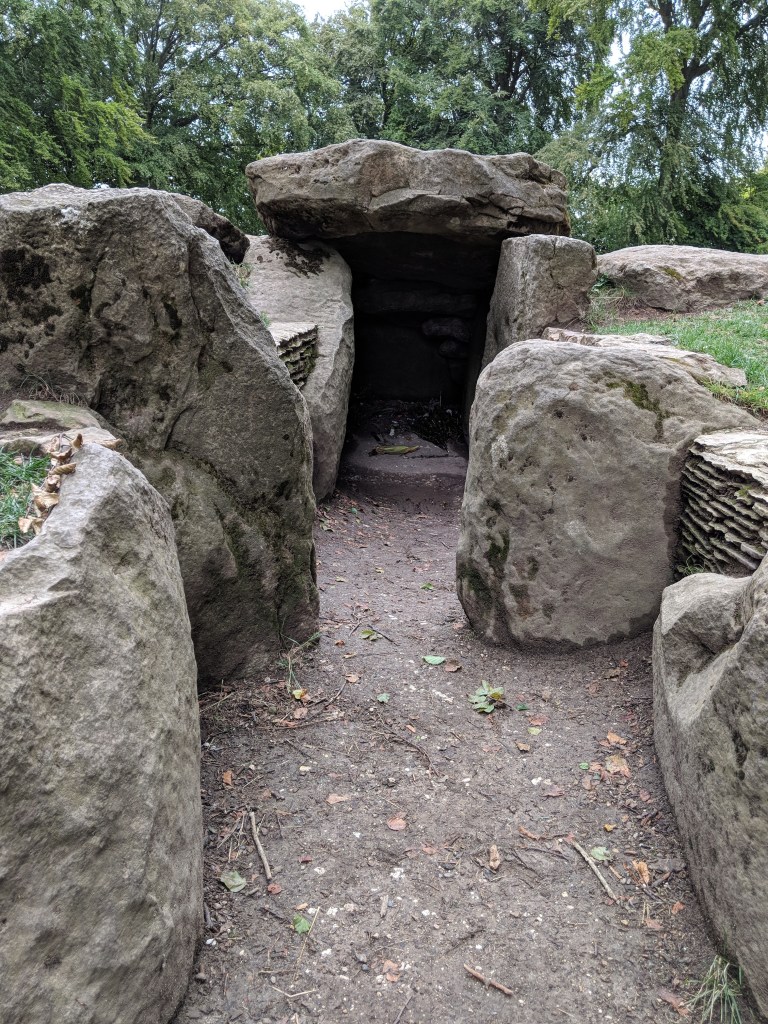
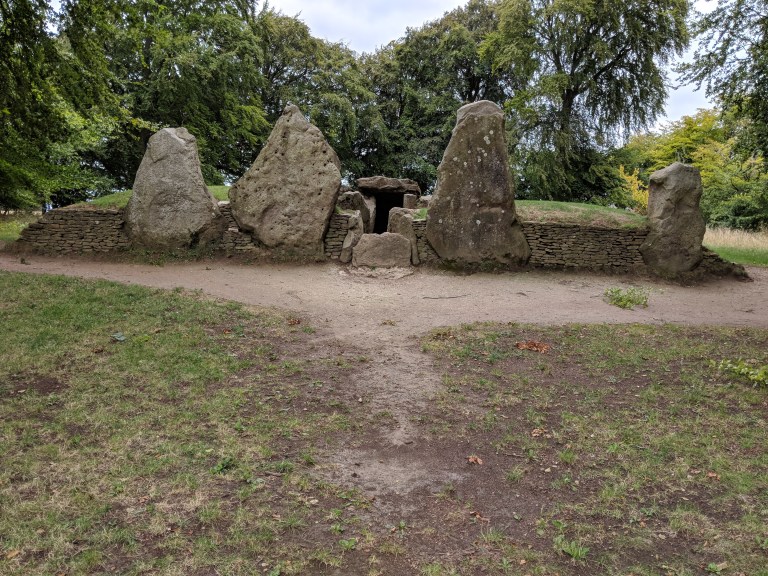
Next we came to Wayland’s Smithy long barrow. I won’t explain it when you can read it yourself.
Following this was the only disappointment of the day. The White Horse of Uffington.
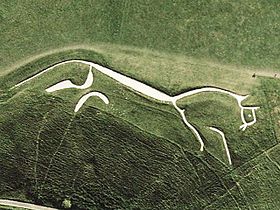
From Wikipedia: The Uffington White Horse is a highly stylised prehistoric hill figure, 110 m (360 ft)[1] long, formed from deep trenches filled with crushed white chalk. The figure was presumed to date to “the later prehistory” – the Iron Age (800 BC–AD 100) or the late Bronze Age (1000–700 BC). This view was generally held by scholars before the 1990s, based on the similarity of the horse’s design to comparable figures in Celtic art. This theory was confirmed following a 1990 excavation led by Simon Palmer and David Miles of the Oxford Archaeological Unit: deposits of fine silt removed from the horse’s ‘beak’ were scientifically dated to the late Bronze Age,[7][8] sometime between 1380 and 550 BC.[1] They also discovered the figure was cut into the hill up to a metre (3 ft) deep, not simply scratched into the chalk surface
What was disappointing was I mistakenly thought the trail would pass in front of the figure so that we could see it. I knew we would be at the top, but from there you can’t see how the figure was laid out. While we were there, there was a maintenance event going on. Hundreds of people were sitting by one of the trenches pounding pieces of chalk with hammers to keep the figure fresh.
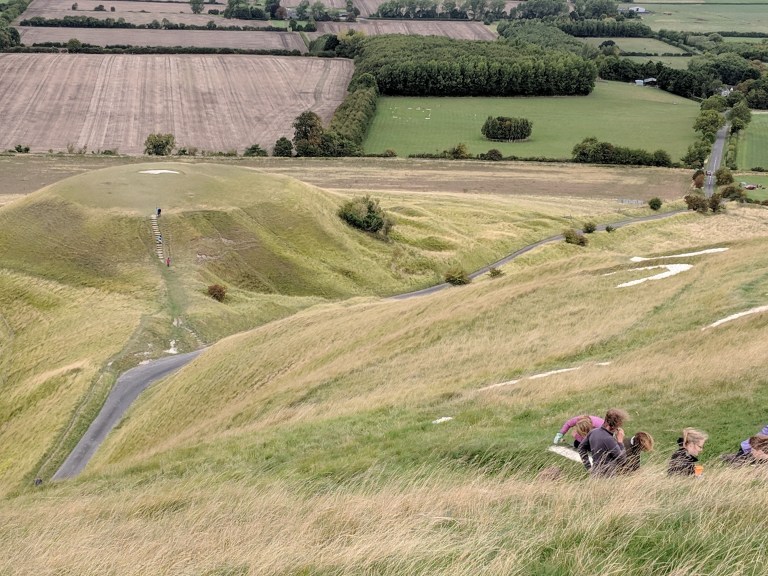

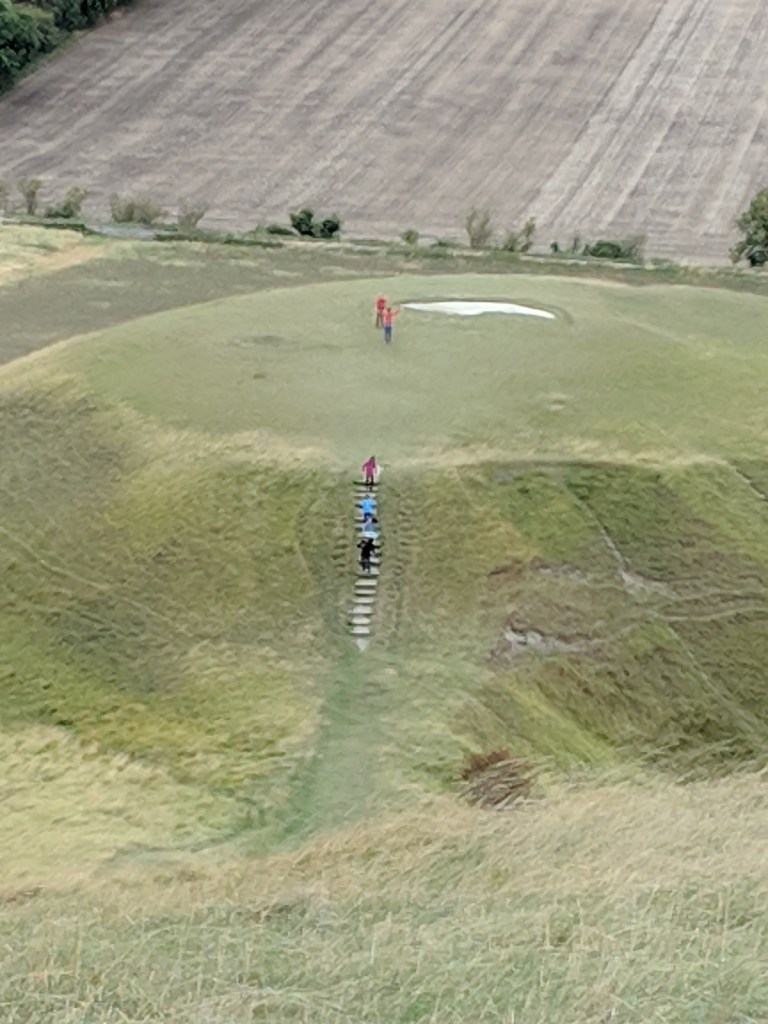
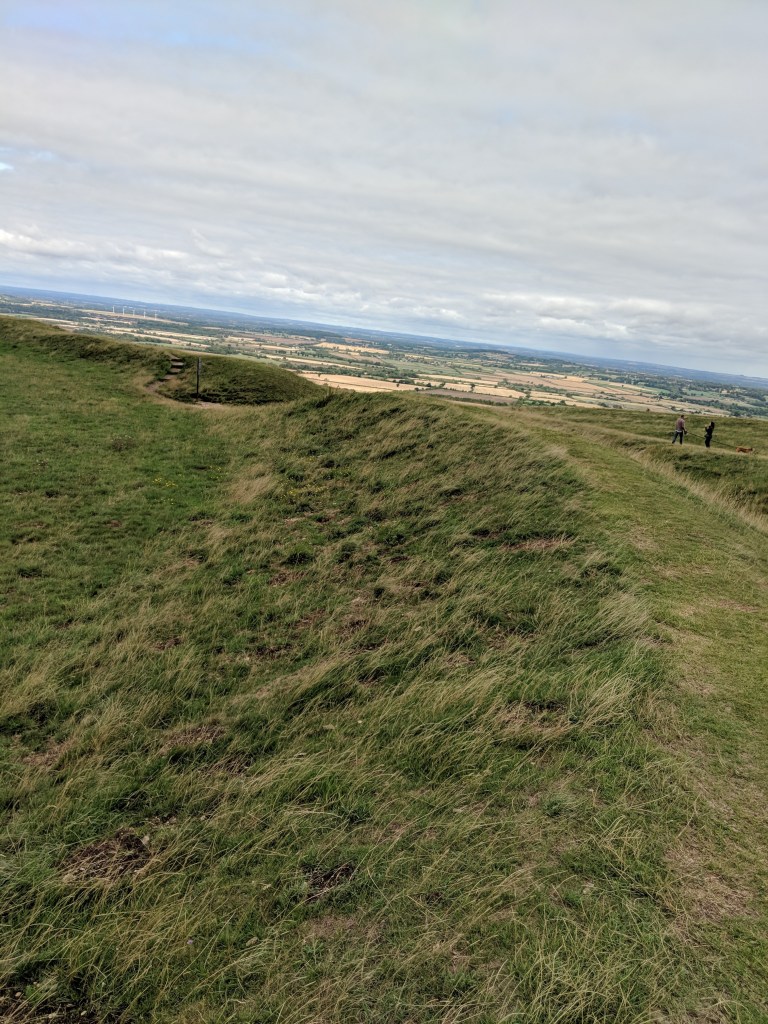
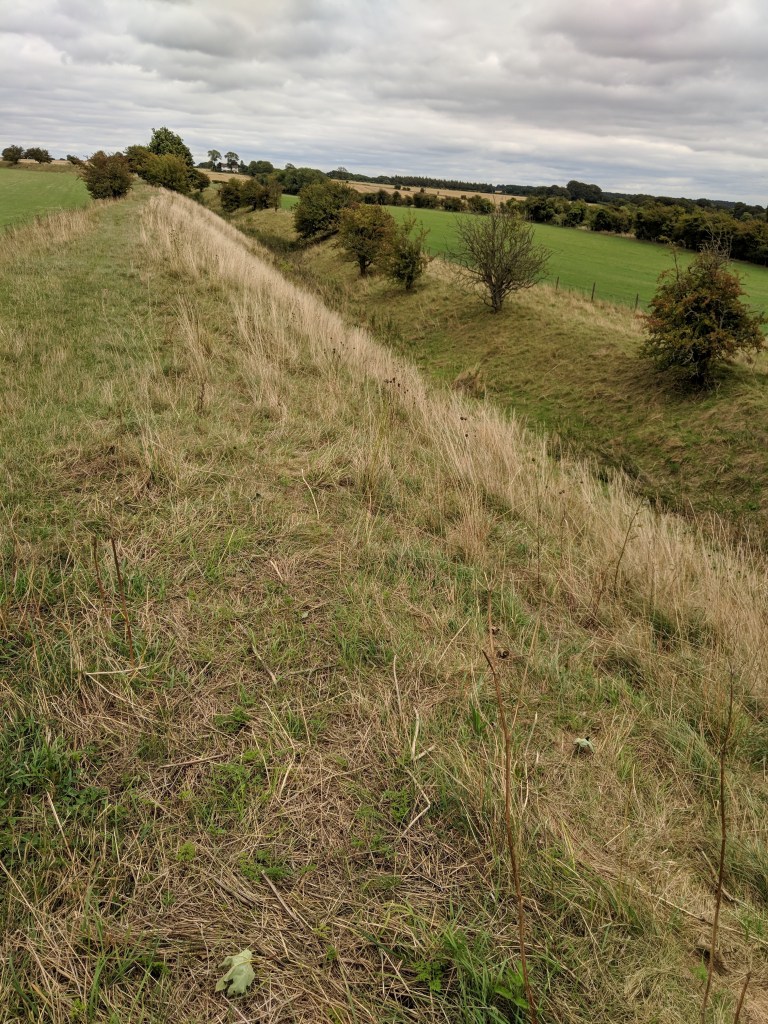
While at Uffington we explored the Uffington Hill Fort. We also explored the Segsbury Camp, right outside of Regis Letcombe. These are both hill forts. These are huge areas of several acres surrounded by a ditch. The dirt from the ditch is used to make walls or ramparts on both side of the ditch, forcing attackers to climb the first wall go into the ditch and climb the higher, defended, inside wall.
Happy Bank Holiday everyone! We went to the Greyhound Pub here for their Bank Holiday Barbecue and had burgers, cole slaw, potato salad and I even had a beer.
From Wikipedia:
Letcombe Regis is a village and civil parish in the Vale of White Horse. It was part of Berkshire until the 1974 boundary changes transferred the Vale of White Horse to Oxfordshire. The village is on Letcombe Brook at the foot of the Berkshire Downs escarpment about 1 mile (1.6 km) southwest of the market town of Wantage.
The parish includes Segsbury Camp an Iron Age hill fort on the crest of the Downs just over 1 mile (1.6 km) south of the village.
The Domesday Book of 1086 records Letcombe Regis. The name may come from the Old English Ledecumbe meaning the “lede in the combe” – i.e. “the brook in the valley.” “Regis” may derive from the Latin ‘rex’ meaning ‘Royal’ with ‘Regis’ meaning The King’s, giving, perhaps, “The Kings brook in the valley.”


 A summer in London
Those neolithic monuments are just SO fascinating!
LikeLike